Showing posts with label Toyota. Show all posts

Monday, October 3, 2011

R33 GT-R Update: Nismo Performance Damper Set

I first read about this particular Nismo product on a fellow BCNR33 owner's blog. Thanks Aki and our cars are awesome!

My brand spanking new Nismo Performance Damper Set has finally arrived from Japan!
After looking into the matter further, I've discovered the following: the technology was originally developed by Yamaha and through collaboration with Japanese carmakers like Nissan, Subaru and Toyota, the technology was slowly disseminated among their respective models. The rally tuning arm of Subaru for example, Subaru Tecnica International - or better known as STi, produce these dampers for their cars - like the WRX STI Spec C Type RA-R.

Try to decipher this STi diagram that explains the benefits of the performance damper - if you dare!

Anyway, here's the official marketing spiel from Nismo:

Even if the car body is reinforced and made more rigid, road surface input through the tires and load shifts during cornering make the entire body act like a spring, causing the occurrence of micro vibrations. The performance damper acts to control the transmission of micro vibrations to the body. During circuit driving, micro vibrations from the car body are transmitted through the steering system to the driver, resulting too often in unnecessary steering corrections. With the performance damper installed, however these micro vibrations are eliminated and excessive steering wheel handling is no longer needed, resulting in more stable handling. Also, in normal driving, the micro vibrations are eliminated, as well providing a much more enjoyable and comfortable ride.


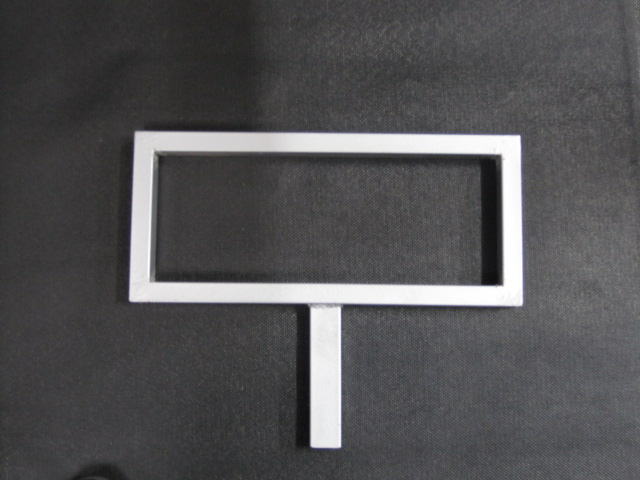
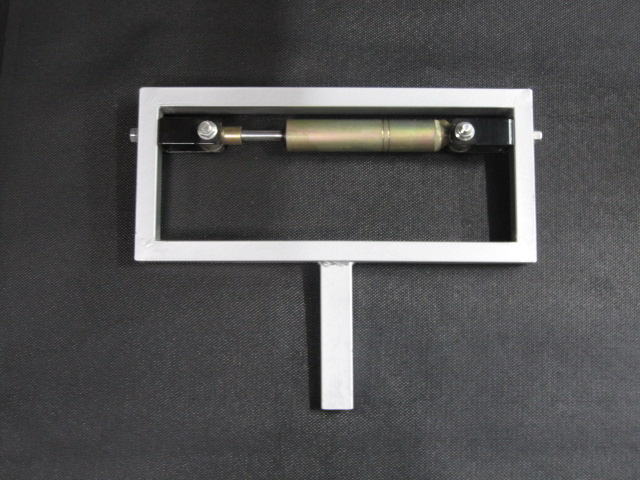
So how does it all actually work? Well heres how. The following pictures will illustrate that a car's front strut towers is not too disimilar from a tuning fork. Now when you strike the fork, you tend to get a nice ring out of it. So imagine if you will, pieces of tubular steel welded up like a giant tuning fork. When you hit it with a hammer, the fork will emit a really loud ring, right? The next step in the demonstration is where the top of the fork is boxed off, like as if it were a strut tower brace that was installed between your car's strut towers. The next time you hit it with a hammer, it should resonate with a low dull tone i.e. a dong like sound. The final step is to have a damper installed between the forks. At the moment a hammer hits the metal piece, it should not emit any noise at all. People have described it like hitting a pillow with a hammer. Isn't that just amazing? The Japanese have done it again! Innovate!
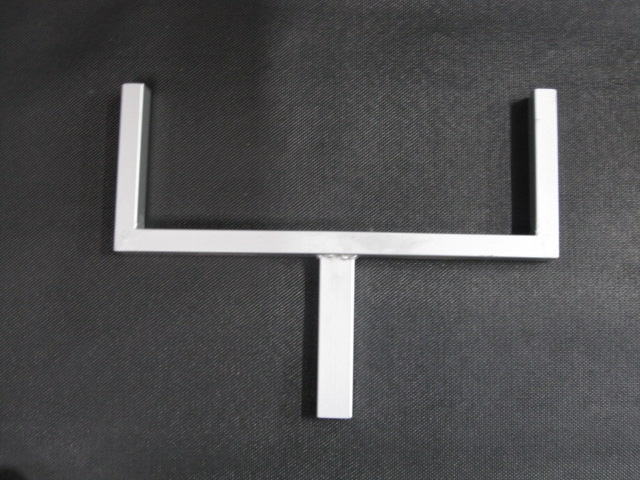
DING!
DONG!
*SILENCE*
For the short period of time that these have been on my GT-R, I've definitely felt a difference. The Skyline is more compliant over bumps and various imperfections that are on Malaysian roads. In a straight line, noise and vibrations are slightly reduced, but its when taking turns that you really feel the full benefit of these dampers. There's very little disruption nor unwated steering wheel movement when taking sharp bends and corners.

The rear damper installed! It bolts on directly behind the stock GT-R rear strut brace! :)
I'm not a professional driver, but I do feel that the GT-R is now more connected to the road with the performance dampers installed. Feedback from the car is greatly improved and you know whats going on beneath those tyres. I actually thought it would be the opposite, that the dampers would absorb shock thoughout the chassis and it would result in a numb steering feel - but that is definitely not the case here!

The front damper installed! A bit more effort is required, clearly!
A great product from Nismo and Yamaha. These should be installed on all GT-Rs.

I'll end my post with a Yamaha press brief, which goes into detail on their technology and how it was first developed:

It is widely known that chassis performance is an important factor that functions along with suspension performance to determine the handling stability and the comfort of the ride in an automobile. For this reason, the various auto makers have invested great efforts in optimizing chassis rigidity as an important component of chassis performance. Amidst these efforts, a new project was undertaken at Yamaha Motor Co., Ltd. to develop a "performance damper" the aim of which was to greatly improve chassis performance in a way that went beyond mere optimization of chassis rigidity by adding appropriate amounts of cushioning effect at certain points.

After the basic concept of the performance damper was proven valid in actual road tests in the autumn of 2000, development efforts to put it in applicable form and improve its performance were carried out at a rapid pace. It then made its appearance as a world's-first technology on the Toyota Crown Athlete VX (2001 limited edition of 300 units). Finally, in April of this year it appeared for the first time in the world on a full-scale production model, the sports grade version of the Toyota Corolla to be shipped to the domestic Japanese, European and North American markets.

The performance damper has a simple structure and is easily mounted on a chassis, and not only does it improve handling stability and ride comfort, it also reduces vibration noise. What's more, these effects are so marked that any driver can feel the difference in normal driving, not just in extreme driving at the hands of trained test drivers. Many domestic and foreign car makers have evaluated the performance damper very highly and expectations are high that it will become a common structural element of cars from now on.

Friday, July 1, 2011

New Project: Time Attack Car

With the R33 GT-R rebuild nearing completion, its time to to start a new project. It has always been my intention to purchase, rebuild and track a car. Basically, I'm looking for a road legal track car to carry out time attack runs in Sepang International Circuit (SIC). Now the next question is, what car to get?

Unlike in Australia, the UK or the States, we Malaysians are shafted when it comes to used cars. In Australia for example, you could purchase a decent road legal Nissan S13 or S14 for as little as RM10,000 - RM15,000 ringgit. Due to the high Malaysian import tax on cars (300% import duties on all foreign cars), used car prices are similarly affected. What this means is that a used S13 or S14 will probably cost three times as much in Malaysia a compared to a similar car in Australia. This makes it a challenge for the average person to pursue his or her motoring dream, to build a drift machine or to own a dedicated track car.

We now move on to the question of what make and model would be suitable for a time attack car. I've narrowed it down to a few budget (and not so budget) vehicles, seeing as this should be cost saving exercise. After all, a time attack car would require a further outlay of money in order to make it track ready.

And here are the contenders with their pros and cons:

 
  Nissan S13 Silvia Coupe

Pros
  • Good RWD base to build up from
  • Easy to get power out of the Nissan SR20 engine
  • Option to retro-fit parts from other Nissan models
  • Massive amount of aftermarket parts
  • Huge supply of halfcuts and spare parts that are already in Malaysia
Cons
  • Can be expensive to purchase
  • Difficult to find one in good condition and tastefully modified
  •  
    Honda Integra DC2

    Pros
    • Light weight
    • Rigid chassis
    • Loads of aftermarket parts available
    • Plenty of halfcuts and spare parts that already in Malaysia
    Cons
    • Its a FWD, meaning the front wheels have to not only steer the car but also slow it down
    • A bit expensive to produce big power being an N/A car
    • Parts can be expensive

         Mazda MX-5 (First Gen / NA)

        Pros
        • Extremely capable chassis
        • Engine responds well to mods, especially when turbocharged
        Cons
        • Manual units are rare in Malaysia
        • Turbo kit has to be sourced from abroad (costly)
        • Not as many halfcuts and spare parts compared to the other cars on this list
        • Cars in good condition still command high prices
        • Standard 1.6 N/A engine is gutless and seriously lacking in torque

        Subaru WRX GC8

        Pros
        • Great AWD race car platform
        • Capable car even in stock form
        • Option to retro-fit parts from STI models
        Cons
        • Expensive to purchase
        • Finding one in good condition is difficult
        • Parts aren't cheap
        • Stock GC8 WRX gearbox is crap
        • Full STI conversion costs a lot of money
        • Can be expensive to get big power out of the Subaru EJ engine

         Mitsubishi Evo II to VIII

        Pros
        • Amazing AWD race car platform
        • Very capable even in stock form
        • Some models are 'race ready' (i.e. Evo VI Tommi Makinen Edition)
        Cons
        • Very expensive to purchase
        • Difficult to find genuine Evos in good condition
        • Will be expensive to produce big power after a certain point

        So which car to get? Find out in the next blog posting!