Showing posts with label BCNR33. Show all posts

Wednesday, December 21, 2011

R33 GT-R Update: R34 GT-R Steering Wheel Swap

Not many people know this but R34 GT-R steering wheels are plug & play when it comes to Series II / late model R33 GT-Rs. Airbang and all mind you, with no error lights showing.


Now theres nothing wrong with the stock R33 GT-R quad steering wheel. Its just that it doesn't have much character going for it. I mean, it only has an embossed 'Nissan' on the horn button, along with the corresponding moon corporate logo and outer red leather stiching. It was also present in the Silvia S14 and other Nissan models like the Skyline GTST (ENR33 / ER33). No offence to the owners of those cars but I wanted a steering wheel that had a tad bit more GT-R exclusivity. Nissan must have really liked the design by the way, because it was still in use in their first generation X-Trail! Ahh, you've served me well old girl...


I've always been a fan of the R34 GT-R steering wheel, mainly because of the tri-star sculpted design and the prominent 'GT-R' horn logo. It's also smaller by an inch or so in terms of diameter. No prizes for guessing where I managed to source a unit (thanks to my good buddy Eu-Jin at JDM Auto Link). Supposedly, these are quite rare and difficult to source.
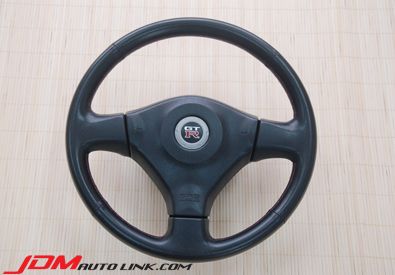

It was a pretty straight forward affair in removing the stock steering wheel. I knew that the airbags in the two steering wheels were of the same model, but there was no harm in checking. To do this, the side latches were opened up and the airbag housing unscrewed. Fortunately, the sockets all matched up, so we were good to go. Do note that this modification is only possible in Series II / late model R33 GT-R's, that feature driver and passenger side airbags. If you have an older BCNR33, then you're unfortunately out of luck. This is confirmed for Series I R33 GT-Rs. Oh and did you know that airbags have a shelf life? The one in my stock R33 GT-R steering wheel has clearly gone pass it's expiry date (circa 1997!), while I'm hoping the R34 GT-R's airbag is still good for a couple more years. Food for thought, gentle people.


Now all that was left to do was to line up the R34 GT-R steering wheel and bolt it in. I have to say that due to the tri-star design, the steering wheel feels much smaller and more chuckable. I just love it because it's a straight fit (no adaptation needed), looks like it belongs there in the first place, is much smaller than the unit that it replaces and really spruces up my R33's interior. Aki, you should really do this mod, mate ;).

Monday, October 3, 2011

R33 GT-R Update: Nismo Performance Damper Set

I first read about this particular Nismo product on a fellow BCNR33 owner's blog. Thanks Aki and our cars are awesome!

My brand spanking new Nismo Performance Damper Set has finally arrived from Japan!
After looking into the matter further, I've discovered the following: the technology was originally developed by Yamaha and through collaboration with Japanese carmakers like Nissan, Subaru and Toyota, the technology was slowly disseminated among their respective models. The rally tuning arm of Subaru for example, Subaru Tecnica International - or better known as STi, produce these dampers for their cars - like the WRX STI Spec C Type RA-R.

Try to decipher this STi diagram that explains the benefits of the performance damper - if you dare!

Anyway, here's the official marketing spiel from Nismo:

Even if the car body is reinforced and made more rigid, road surface input through the tires and load shifts during cornering make the entire body act like a spring, causing the occurrence of micro vibrations. The performance damper acts to control the transmission of micro vibrations to the body. During circuit driving, micro vibrations from the car body are transmitted through the steering system to the driver, resulting too often in unnecessary steering corrections. With the performance damper installed, however these micro vibrations are eliminated and excessive steering wheel handling is no longer needed, resulting in more stable handling. Also, in normal driving, the micro vibrations are eliminated, as well providing a much more enjoyable and comfortable ride.


So how does it all actually work? Well heres how. The following pictures will illustrate that a car's front strut towers is not too disimilar from a tuning fork. Now when you strike the fork, you tend to get a nice ring out of it. So imagine if you will, pieces of tubular steel welded up like a giant tuning fork. When you hit it with a hammer, the fork will emit a really loud ring, right? The next step in the demonstration is where the top of the fork is boxed off, like as if it were a strut tower brace that was installed between your car's strut towers. The next time you hit it with a hammer, it should resonate with a low dull tone i.e. a dong like sound. The final step is to have a damper installed between the forks. At the moment a hammer hits the metal piece, it should not emit any noise at all. People have described it like hitting a pillow with a hammer. Isn't that just amazing? The Japanese have done it again! Innovate!

DING!
DONG!
*SILENCE*
For the short period of time that these have been on my GT-R, I've definitely felt a difference. The Skyline is more compliant over bumps and various imperfections that are on Malaysian roads. In a straight line, noise and vibrations are slightly reduced, but its when taking turns that you really feel the full benefit of these dampers. There's very little disruption nor unwated steering wheel movement when taking sharp bends and corners.

The rear damper installed! It bolts on directly behind the stock GT-R rear strut brace! :)
I'm not a professional driver, but I do feel that the GT-R is now more connected to the road with the performance dampers installed. Feedback from the car is greatly improved and you know whats going on beneath those tyres. I actually thought it would be the opposite, that the dampers would absorb shock thoughout the chassis and it would result in a numb steering feel - but that is definitely not the case here!

The front damper installed! A bit more effort is required, clearly!
A great product from Nismo and Yamaha. These should be installed on all GT-Rs.

I'll end my post with a Yamaha press brief, which goes into detail on their technology and how it was first developed:

It is widely known that chassis performance is an important factor that functions along with suspension performance to determine the handling stability and the comfort of the ride in an automobile. For this reason, the various auto makers have invested great efforts in optimizing chassis rigidity as an important component of chassis performance. Amidst these efforts, a new project was undertaken at Yamaha Motor Co., Ltd. to develop a "performance damper" the aim of which was to greatly improve chassis performance in a way that went beyond mere optimization of chassis rigidity by adding appropriate amounts of cushioning effect at certain points.

After the basic concept of the performance damper was proven valid in actual road tests in the autumn of 2000, development efforts to put it in applicable form and improve its performance were carried out at a rapid pace. It then made its appearance as a world's-first technology on the Toyota Crown Athlete VX (2001 limited edition of 300 units). Finally, in April of this year it appeared for the first time in the world on a full-scale production model, the sports grade version of the Toyota Corolla to be shipped to the domestic Japanese, European and North American markets.

The performance damper has a simple structure and is easily mounted on a chassis, and not only does it improve handling stability and ride comfort, it also reduces vibration noise. What's more, these effects are so marked that any driver can feel the difference in normal driving, not just in extreme driving at the hands of trained test drivers. Many domestic and foreign car makers have evaluated the performance damper very highly and expectations are high that it will become a common structural element of cars from now on.

Monday, September 19, 2011

Review: Whiteline Performance Suspension

Since I'm a big supporter of Aussie made automotive products, I've decided to write a couple of short reviews on a few of them for the benefit of the Malaysian motoring public. Besides Whiteline, theres Haltech for your electronic engine management needs, Disc Brakes Australia (DBA) for rotors and Turbosmart for wastegates. The Aussies make pretty decent stuff and I'm using all those brands in my cars.

As some of you might have noticed, I am currently using Whiteline Performance Suspension bushes and sway bars on my GT-R.

I actually started using Whiteline on my cars since my student / working days in Melbourne, Australia. Great people to deal with over the phone and easy pick up at your friendly neighbourhood Pedders Suspension shop (they have a tie up with Whiteline). Pedders is a chain of suspension tuning shops which can be found in many Australian towns and major cities.

Anyway for everyone's knowledge, Whiteline suspension suspension products are actually manufactured in South Korea but design and testing is done at their facility in Somersby, New South Wales (near Sydney). Whiteline recently had their swaybars TÜV SÜD certified, so that they could be sold in the EU. They are pretty much up there in terms of quality seeing as European standards are quite stringent when it comes to automotive parts.

As with most automotive parts, a company's product is as good as how well it does in motorsport events. Whiteline parts are used in major events such as the recent World Time Attack Challenge (WTAC) that was held in Australia. A Whiteline equipped R35 GT-R took the number one spot in the Open Class category and several cars in the Pro Class (like Mercury Motorsports' R35) used Whiteline swaybars. Whiteline parts have also found their way into the rallying scene. WORKS Motorsport's Mitsubishi RalliArt SST participates regularly in Rally America, The Oregon Trail. Whiteline has been supporting the WORKS car with adjustable sway bars, alignment products, polyurethane bushings and aluminium bushings.

I'll leave with you some pictures of Whiteline's NSW facility. If you're looking to improve the handling of your car or wanting to refresh tired suspension parts, check Whiteline out as they cater to a wide range of makes and models, from Subarus to Volkswagens.

http://www.whiteline.com.au/ 

Heres one of their sway bar stress testing machines:


Sway Bar Blanks being fashioned on site for testing purposes:


This is their stockpile of swaybars at Whiteline warehouse / HQ in NSW:

Wednesday, September 14, 2011

R33 GT-R Update: Nismo Strengthened Rear Lower A-Arm and Cusco Adjustable Pillow Ball Tension Rods


I actually installed these some time back but haven't had time to sit down and blog about them.

As some of you might well know, the GT-R is a 14 year old car and a lot of things get worn out as the years roll by. Hence, its imperative to refresh certain areas of the car, like the suspension, as it might pose a hazard to the driver and other road users. Its also a pain to drive around with a worn bushing or a less than functioning rear arm, as the car's ride tends to suffer as a result. More importantly, the GT-R's handling is much improved when newer and better suspension parts have made their way onto it's chassis.

Note the condition of the 14 year old Nissan factory rear lower a-arm - worn out!
This I can attest to after experiencing the before and after effects of something as simple as installing aftermarket adjustable tension rods. Its like night and day - suddenly you have the confidence to take corners at high speed and the car feels so much more controllable. The turn-in motion is also greatly improved and the car feels flatter as it pivots to where you want it to go. The rear also benefits from the strengthened a-arm plate as it's less affected by road irregularities and feels more planted when the car accelerates. 

All of this is multiplied in terms of driving pleasure as you get a sense of rightness about the car's condition and overall driveability. As I have said in previous posts, once you install one aftermarket suspension part, you'll be hooked and will have to the urge to change everything as a result of the positive effect they will have on your car.

The nice and shiny (and adjustable) Cusco pillow ball tension rod
The Nismo rear lower a-arm set looks right at home in the passenger side rear tyre well of my GT-R! :)
And so till the next suspension upgrade, I'll leave you with RHD Japan's description of the recently installed parts:


"The NISMO Rear Lower A-Arm Set - Strengthened R33 is part of the NISMO Suspension Link Series and were created by NISMO to provide true suspension performance for Nissan drivers. Included are the strengthened bushings to provide better feedback through cornering to make the vehicle more predictable. These are for true suspension performance, and are recommended to anyone using sport suspension and tires. The Nismo Strengthened Rear Lower A-Arms are a great way to refresh your vehicle`s suspension components by removing the aged arms that came stock from the factory. All units come in the Nismo silver color. These are stronger than the standard Nismo units because of an added plate on the underside to provide more strength against pressure and stress". - RHD Japan


"The CUSCO Adjustable Pillow Ball Tension Rods Nissan stop the movement and flex that change the geometry on the front suspension under hard braking and cornering and drifting. These Cusco Adjustable Pillow Ball Tension Rods help with stability and predictability when drifting or racing the car hard. They also improving initial turn-in response. They are designed to work with stock suspension or nearly every aftermarket system available". - RHD Japan

Tuesday, August 23, 2011

R33 GT-R Update: Carbing Air Diversion Plate


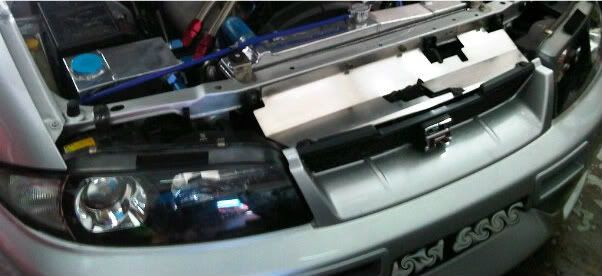
A radiator cooling plate is a device that helps direct air to flow from a car's grille straight to it's radiator. This promotes better cooling as more air flows through the radiator fins. The plate is installed between the front grille and the top section of the radiator. They are normally made out of aluminium but you do get some carbon fibres ones as well.

What normally happens is that, air escapes from the top of radiator instead of going through the radiator. Cooling plates help restrict the escaping air and divert it to where it really needs to go.

The results? It actually works! I've noticed that when the engine is fully warmed up, the water temperature reading is lower by 10% - 20% and this was after the Carbing Air Diversion Plate had been installed. Its amazing how something so small can have a positive effect on a car. Plus it makes the engine bay look that much nicer!

Why Carbing you might ask? Well...


Since the establishment of OKUYAMA Co.,Ltd. as an After-Market Auto Parts Manufacturer in 1977, Carbing has been developing various parts including Roll Bars, Strut Bars and Body Reinforcement Parts.

The company has their own motor sports team, “TEAM OKUYAMA”, that has been aggressively participating in Japanese domestic motor sport competitions like JAPAN NATIONAL DIRT TRIAL CHAMPIONSHIP as well as JAPAN GYMKHANA CHAMPIONSHIP. Team Okuyama became Champions in Class D (unlimited modifications) at the JAPAN GYMKHANA CHAMPIONSHIP for 3 consecutive years (1988-1990).


They also became the Series Champion in 1993 with their Mitsubishi Lancer Evolution I at JAPAN NATIONAL DIRT TRIAL CHAMPIONSHIP. And in 2003 they were Champions again with their Mitsubishi Lancer Evolution III.


All of Carbing's modification parts have been developed/manufactured using the practical data that had been acquired in the above-mentioned competitions.

Sunday, August 21, 2011

R33 GT-R Update: Defi-Link Display, Defi-Link Control Unit II & Defi-Link BF Boost Meter

Stock is best in my book. Thats the reason why I've been very conservative thus far with GT-R's outward appearance.

The same principle applies to the interior, as I'm not one to go bonkers on flashy gauges and large display LCDs. Nonetheless, I need to know whats going in the engine bay, in light of the car's new power output. Things like having an accurate reading of the RB26's oil temperature, water temperature, oil pressure and so forth, are crucial to ensure the longevity of the newly rebuilt 2.6L engine. But how do we avoid the problem of having too many gauges cluttering up the dashboard? Not only do they attract the unwanted attention of thieves, by having too many sensors drilled into your engines bits, it will create unnecessary stress points all over the block.

Enter the Defi-Link Display.


Defi-Link Display is a multipurpose monitor which provides information on speed, oil temperature, water temperature, oil pressure, fuel pressure, and exhaust temperature by connecting to the Defi-Link Control Unit II or the Defi-Link Control Unit.

Real-time digital information includes speed, oil temperature, water temperature, oil pressure, fuel pressure and exhaust temperature. Sensor sets need to be purchased separately to display the information on pressures and temperatures.

Vehicle performance data and peak values are placed in memory for 3 minutes, allowing examination of data after running the vehicle.
*Defi-Link Control Unit II has a 3 minute memory. Defi-Link Control Unit has a 40 second memory.

The Warning LED lights when the set warning value is exceeded for oil temperature, water temperature, exhaust temperature and engine RPM. The Warning LED lights when measured value drops below the set warning value for oil pressure and fuel pressure.

Defi stopped producing this particular display in 2010, so I was fortunate that my tuner sourced a unit along with some goodies; a Defi-Link Control Unit II and a Defi-Link BF Boost Meter. All three were in good condition and we got them for a steal. Even though Defi now offers a more advanced display, which is the Defi-Link Meter ADVANCE ZD, I don't really fancy the new look (garish gold backlight), it's is too big (awkward to mount) and I'm fine with having only two readings on display at any one time. The rev counter is a nice feature but not necessary and there's standalone products like Shift-I's Progressive Shift Indicator, which does the exact same thing.


Defi-Link Control Unit II is a necessary controller to install Defi-Link Meters, Defi-Link Meter BFs, and Defi-Link Displays. Up to 7 gauges and displays can be connected and controlled by one Control Unit II. Defi-Link System allows gauges and displays to be attached to Defi-Link Control Unit II with a single daisy chain wiring system. Driving data can be stored and can be replayed up to 3 minutes. Pause, speed play, forward, and rewind function can be applied during playback.

As for the Defi-Link BF Boost Meter, press the play button in the flash animation below and you'll be able to see how the unit activates once the ignition key is switched on:


And here is the end result :). Quite pleased with how things turned out as I hate the look of gauges scattered all over the interior. However, as I had mentioned earlier, it is necessary to know the parameters of your engine and the Defi device helps with this. So to reiterate, I've found the Defi-Link Display to be convenient since it's small and more importantly, allows me to monitor the GT-R's 'health' through a series of readings. They are essentially; water temp, oil temp, fuel pressure, oil pressure and exhaust gas temperature. Imagine if you had to get gauges for all of those things .That would be one heck of a lot of gauges. Also, peak / warning settings are a breeze to configure, and with the built-in warning feature, trouble parameters can also be set easily. 

Oh and lastly, it looks pretty darn good too, especially at night.


Thursday, August 18, 2011

Vimeo and the GT-R Family

I never get tired of watching this vid, especially the part where all four GT-R generations are cruising down the street in line abreast formation.


And big up to Vimeo for the following reasons:

1. No spam

2. Professional content

3. Professional contacts

4. Sleek video player

5. Higher quality video in HD


“Vimeo is for people with a passion.
Youtube is for people who want fame and popularity.” – DoubleFilms

R33 GT-R Update: TEIN Mono Flex Suspension with EDFC


What can I say about the Tein Mono Flexes and the Electronic Damping Force Controller (EDFC)? Since that was quite a mouthful, to sum them up in one simple word - just plain AWESOME!

They've totally changed the whole feel of the car, and having the EDFC controller at your finger tips is just such a joy. They have once again made me fall in love with the R33 and I can't help but look forward to the next time that I'm behind the steering wheel. The feeling that you get is actually is quite similar to Audi's Drive Select in terms of damping and traction (Comfort / Sport / Dynamic). This very positive experience came as a pleasant surprise, as prior to purchasing the TEINs, I've never sat in a car that was equipped with TEIN Mono Flex and EDFC.

PIMPIN, a fellow Skyliner who owns a BNR34, is an ardent supporter of these two TEIN products... so much so that he has installed the Mono Flex / EDFC combo in all of his previous rides (including the R34 GT-R)! Even with that sort of endorsement by a close friend, I was still a bit sceptical. I was worried that the TEINs would be stiffer than my old HKS Hiper-Ds - even at it's softest EDFC setting. As for the HKS suspension, I've never been happy with them because the Hiper-Ds are VERY bouncy on less than perfect roads (poor damping) and they don't inspire confidence when taking sharp bends or corners (very floaty to say the least).


Now my main concern was that at first glance, the spring rate on the MonoFlexes are EXTREMELY high. So one would immediatly assume that the ride would be harsher (case in point, the side by side pic found above). Before I go any further, lets have TEIN explain a little bit more about their Mono Flex and EDFC:

The MONO FLEX coilover kit has been developed for entry-level competition motorsports and advanced street driving. Features include 16-way damping force adjustability (combined compression and rebound), a mono-tube internal design, pillowball upper mounts, and EDFC compatibility. There are independent adjustments for ride-height and spring pre-load settings for increased suspension tuning. The new Mono Flex also includes TEIN's latest technological innovation, Micro Speed Valving (MSV) system, which allows the driver to feel a greater difference in damping force adjustments. Designed and developed for consumers seeking aggressive handling on the street and at the track.

The EDFC (Electronic Damping Force Controller) makes it possible for the driver to control the damping force at the touch of a button while in the driver's seat. This is accomplished by controlling stepping motors installed on each shock absorber. Because the damping force can be controlled with such ease, the driver can adjust the suspension to suit all road/track conditions. Thus allowing the driver to fully enjoy the driving experience.

By inputing your preferences into the controller, the new setting will be transmitted instantaneously to those little small boxes that you see on top of all four of the TEIN suspension mounts.

I found out very quickly that setting the EDFC to 0 Front, and 0 Rear resulted in you feeling EVERYTHING on the road surface. Sort of like dragging yourself naked across the street. This prompted me to increase the settings to 12/14. Immediately, the harshness subsided. TEIN did an unbelievable job with their spring and damper design, which resulted in the production of the MonoFlex. With the settings at their softest (16/16) I was able to experience a near stock like ride quality at low speeds. Of course, the same is not true when I bumped the EDFC up to 0/0 once again. You felt everything, and it hurt. Definitely not the sort of setting that one would want when cruising down inner city roads. On smooth highway asphalt though, the 0 / 0 literally blew me away. I could easily carve corners at significantly higher speeds than I ever did with the HKS Hiper-Ds. The TEINS seem to make the car that bit more predictable and gave me the confidence to push the car slightly closer to the limits. They also help in the traction department especially when launching the GT-R, as the rear is squats easily due to the softer damper.  I reckon 0 / 0 would be superb on a track like Sepang, where you really get to test the TEINs to the maximum of their ability.

HIGHLY recommended.

Rainbow tyre well thanks to the yellow of Whiteline and Goodridge, blue of Cusco and green of TEIN. Soon to be joined the matt silver of Nismo (strengthened lower rear A-Arm).

Tuesday, August 2, 2011

R33 GT-R Update: Sun Line Racing Front Pillow Camber Arms

In preparation for a drive up Fraser's Hill, a former colonial-era hill station in the state of Pahang (more info here via Wikipedia Travel), I sent the GT-R in for a suspension realignment.

I had noticed that the car would slowly veer off to the left when running in a straightline, in the absence of any steering wheel input. It turns out that my front upper camber arms were out of whack. The realignment guy said that the bushings on the factory arms were probably worn out and I believed him, seeing as they've been on the car since it left the factory in 1996! Thats some 15 years ago!

So the task for that day was to look for a replacement front upper camber arms, preferably adjustable ones. Why adjustable you might ask? Well for one, it allows you to set the car up for more negative camber and this is always good for track days. It makes it easier for the car to go around corners and it promotes better tyre wear. Some of you might recall that I changed all of my old factory suspension bushings to Whiteline ones, when I first got the GT-R. I should have looked at replacing the arms too, both front and rear. Chalk it up to inexperience!

Now I live in Malaysia, so GT-R parts are not that easy to come by. According to my tuner, the golden age of GT-R ownership in our fair country was some 5 years or so back, when parts were readily available. The R35 GT-R had not arrived yet and vendors heavily stocked up on BNR34 parts, which mostly are plug and play for BCNR33s. So without some effort, I managed to source a pair of used Sun Line Racing Front Pillow Camber Arms. Least I think they are Sun Line Racing units... After inspecting the arms, my tuner said that they were clearly of Japanese make and hence, were worth buying. Anyway, one can't be choosy when supply is short and time is of the essence. What was important was that the arms were adjustable, the rubbers bushing looked pristine and the pair were clearly of superior make.

Now whats so great about the Sun Line unit?


 Heres an excerpt from Nengun:
  • R33/R34 model includes four stage camber adjustment, ranging from standard to about -2 degrees
  • Camber adjustable highly accurate specific pillow ball
The alignment guy was spot on. These are my old, non-adjustable front upper camber arms. Note the very poor state of the rubber bushing:


Side by side comparison between the new and the old:


The GT-R was sent back in for another round of suspension realigment after the Sun Line arms were installed. Upon taking delivery of the vehicle, I immediately noticed that the car would no longer slowly veer off to the left. Turn in and cornering had also improved - not really surprised, as the dilapidated factory ones were probably slipping, due to the very poor state of the rubber bushings. 

So I was very happy with how things turned out. So happy in fact, that I decided to get Cusco Adjustable Rear Upper Arms and Tein Tension Rods after the Fraser's Hill drive. Will write about these two mods in my next R33 GT-R update.

I've been officially bitten by the aftermarket suspension mod bug!

Monday, July 25, 2011

R33 GT-R Update: Nismo 320km/h Speedometer Installed


Being an old car, the factory R33 GT-R speedometer needed replacing. There were certain tell-tale signs - some of the gauges weren't really all that accurate (the water temp needle for example) and the backlight wasn't as bright as it used to be or should be.

 Nismo to the rescue

Seeing as the car is now capable of reaching higher levels of speed (thanks to the newly rebuilt forged engine), it was time to install Nismo's version of the GT-R speedometer. The reasons being that the max speed limit on the Nismo unit is not stuck at a boring Japanese 180km/h and the rev counter goes all the way up to a whopping 11,000 rpms. Now I'm not sure if I'll abuse the car and push it to those limits, but at least the speed needle won't be bouncing off the 180km/h marker anymore.

And last but not least... When the sun goes down and your sitting in the dark - you turn the ignition key and flick on the headlight switch - at that very moment, you just can't help but feel a sense of satisfaction and pride. It's almost like driving a brand new car, which is true to a certain extent.


Big shoutout to Miguel from NeweraParts.com for helping me with this upgrade.

Friday, July 8, 2011

Project Time Attack: Nissan S13 Coupe


In my previous blog post, I spoke of finding the right car to be turned into a time attack machine. After much deliberation and looking at several makes and models, I've narrowed the field down to one car and thats a 1990 Nissan S13 Silvia Coupe. 

My decision to go with a S-Chassis is primarily down to six factors, some of which were mentioned in the previous posting but will be further extrapolated here: 

  • Good, affordable rear-wheel drive base to build up from
Front-engine, rear-wheel drive (FR) cars have a natural tendency to oversteer. Controlled oversteers can technically help you set faster track times but can be very difficult to control.This naturally happens as the rear wheels are used for acceleration, while the front wheels steer the car. Rear wheel drive (RWD) cars tend to balance towards 'oversteer' which sees the front of the car pulling to the inside of the corner (whilst the rear comes out). As some of you might well know from seeing drifters work their magic, some opposite lock, combined with acceleration, can help nip this problem in the butt. Therefore, if given sufficient grip, RWD is near perfect for track  - proof of this being that every major motorsport event in the world uses the FR layout. Even current most popular all-wheel drive (AWD) car in the world today, the Nissan R35 GT-R, has dropped its AWD system in favour of a FR setup, as Nissan seeks to dominate proceedings in the Super GT series. 

  • Easy to get power out of the Nissan SR20DET engine
The SR20DET is a highly tuneable engine and its popularity is based on the motor's ability to produce power on the cheap. Also, the SR20's all alloy block, alloy heads, twincams, 16 valves and an intercooled T28 turbo, indicates that the engine possessed technology that was ahead of its time. This makes it a good engine to use in amateur motorsports.

  • Option to retro-fit parts from other Nissan models
Something I've learned and come to appreciate after months of GT-R ownership is that, Nissan parts are highly interchangeable. Not only does this feature exist between cars that belong to the same family tree but also with other Nissan cars that were made on a different production line. This is also inter-generational feature - S13 can for example, make use of newer parts that were a standard feature on later model Silvias like the S14 and S15. 

  • Massive amount of aftermarket parts
Testament to the popularity and longevity of the SR20DET, the engine enjoys tremendous aftermarket support and is fully backed by all major Japanese tuning houses. Even till present day, its easy to procure new aftermarket parts for an S13, as these items are still in production.

  • Huge supply of halfcuts and spare parts that are already in Malaysia
This has to do with the fact that the SR20 was used to power many of Nissan's cars since the early 1990s. Hence, a large supply of halfcuts and parts have made their way onto Malaysian shores. Production numbers of the S13 alone, is staggering - some 251,410 units were built from 1989 to 1998.

  • Proven track platform
Furthermore, the track capabilities of the S13 Coupe have been amply showcased at Sepang by Yoong (Ee Yoong Chern) and his HKS Garage R Hiper S13. The car lapped a best time of 2.26:5 at last year's Time to Attack Sepang and was ranked 4th overall. I got to know of Yoong through the Malaysian Skyline fraternity as he owns a R33 GT-R as well. You should see him drive it up Ulu Yam.


These following pics were taken prior to delivery of the car. I purchased the vehicle for a song and it came equipped with some goodies (widebody kit / S15 five lug conversion / R32 GT-R brakes / half cage though). The body is also very straight.

The S13 is currently undergoing a major make over - all of its consumables have been a changed, a JIC adjustable suspension installed, a new S14 gearbox bolted in, a Nismo GT LSD for the rear and lastly, 17" Work +5 offset rims with new tyres to help it steer better. I'm hoping it'll be ready for this weekend, so I could join a jaunt up Gohtong Jaya with the Italia Auto boys.

Ignore the drift, ricey bits. Those will be rectified in due time and a 2.2 stroker kit + Haltech ECU + cams + disco potato will be going into that SR20DET:


Monday, May 2, 2011

Spare Engine Rebuild Update: Tomei Poncams


The rebuild is going well and I've sent in my Tomei camshafts + Pulleys and a N1 Water Pump in for the final stage of the project. Looking forward to how the cams perform as not only will they improve response and overall performance but the poncams will also have a positive affect on the R33 GTR's exhaust sound.

And why Tomei? Tomei Poncam camshafts are designed as a "drop in application", so no dialling in required as the nock-pin has been pre-set. The Poncams are also designed to work with the standard valve springs and offer the best drop in performance gain for both street and track use. No machining is required at all.

Tomei manufactures several camshafts for the RB26 engine, the most mild being the Poncams. Designed as an upgrade when compared to stock cams, the Poncams fit all generations of the RB26 engine (R32, R33 and R34), and come in three types, Type A, Type B, and Type R. The differences between the Type A and Type B Poncams are limited, with the Type B version featuring 260° of lift on the exhaust, compared to 252°. This slight increase in duration means more air can enter the cylinders at higher RPM. The downside to additional duration is that low end power is sacrificed, as the turbochargers typically can not move enough air at lower engine speeds. The Type R Poncams were designed by Tomei to cater to those who wish to remain "street legal" by Japanese standards. This means decreased duration for better emissions, as well as compatibility with stock or aftermarket catalytic converters.

Type A camshafts are suitable for engines that will be using stock or larger bolt on turbochargers. Type B camshafts are for engines that will be running N1 turbo chargers or full aftermarket turbo kits. The Type R camshafts should only be used when a car retains the factory catalytic converter, or when you wish to upgrade to an aftermarket catalytic converter.
 

Tomei Pon Camshafts + Pulley Set: Nissan BNR32/BCNR33 RB26DETT Duration IN 260, EX 252, Lift 9.15 (Pon Cam + Cam Pulley IN & EX) 143036 A Type + 153027 Cam Pulley.

Excerpt from nengun.com about the Tomei Poncams:

Tomei presents the popular poncams. Generally, engine tuning is to modify the torque characteristic of engine by changing cam duration timing and height of the cam lift, so as to gaining maximum torque and horse power. However, when tuning the engine strictly, it should be carried out with the idea of securing effective area of the valve not only by duration timing and height of the cam lift, but also by through improvement of its intake efficiency. High valve lift allows huge amount of air to flow in, yet it mechanically damages the system and gains friction loss. Also, wide cam duration will deriver great power at high RPM, but it gives rough engine character at low RPM too. Tomei have worked to get an ideal well-balanced profile of camshaft and succeeded to give it 1.3 to 1.5 times more effective area than regular camshafts.


Sunday, March 27, 2011

The repainted RE30s are back on my R33 GT-R

Words escape me, so I'll let the pictures do the talking... ;)


The sight that greeted me as I arrived at Autodetailer earlier today (picture courtesy of Darren): 


Couldn't be happier! =)